Founding Pilot — the first 50 brands get 35% off for 12 months, direct founder support, and a hand in shaping what we build next. Claim your spot →
Craft — How to Capture Kitchen B-Roll Without Slowing Service

Journal Craft 1 August 2026 5 min read Synthopia F&B Index

How to Capture Kitchen B-Roll Without Slowing Service

Grab usable kitchen b-roll on your phone without slowing service: the five-second rule, prop-and-forget, and the exact moments worth filming.

The sizzle, the steam, the hands at the pass: that's the footage that makes a food video feel alive. It's also the first thing you lose, because service never stops to let you film it. You don't need a shoot. You need a phone, a spot to prop it, and a habit.

0.37%: Static image posts average a 0.37% engagement rate on Instagram and are down 17% year on year, per Socialinsider's 2025 benchmarks, while reels sit higher.

3 minutes: Instagram reels can run from three seconds upward, and reels over three minutes stop being pushed to people who don't already follow the account, per SellerPic's 2026 breakdown of Instagram's limits.

What b-roll is, and why it beats a static plate

B-roll is the supporting footage: short clips of process and atmosphere that an editor cuts to between the main shots. Steam off a pan, a knife through a bun, sauce hitting a plate. On its own each clip is nothing. Together they make a video feel like a real kitchen instead of a menu photo.

And motion travels. According to Socialinsider's 2025 Instagram benchmarks, static image posts average a 0.37% engagement rate and are down 17% year on year, while reels sit higher, because they show craft and movement a still can't. Your line produces that craft every service. B-roll is just the habit of catching a few seconds of it before it's gone.

The five-second rule

The biggest mistake is trying to film a scene. B-roll isn't a scene, it's a moment. Five clean seconds of one clear action beats thirty seconds of a busy pass where nothing reads.

Instagram reels can run from three seconds upward, and in the final cut an editor rarely holds a single clip for long, so a five-second grab gives plenty to trim from. Worth knowing too: reels over three minutes stop being pushed to people who don't follow you, per SellerPic's 2026 breakdown of Instagram's limits, so length was never the point. Clarity is. Hit record, catch the pour or the plate-up, stop, move on. Service doesn't even notice.

Prop it and forget it

You can't hold a phone and run a pass, so don't try. Lean the phone against a spice tin, a bottle, a rail, anything at the right height, angle it at where the action happens, and hit record. Then go back to work.

The action walks into frame on its own: the chef plates, the steam rises, the hand reaches in, and you've got it without standing there like a bottleneck. This is the whole trick to filming in a live kitchen. You're not directing a shoot, you're leaving a camera running in the right spot for a minute while the line does what it always does.

Stop guessing what to post.Synthopia turns one three-minute brief into a month of campaigns, built from your own photos.Preview yours free

The kitchen moments worth grabbing

Not every moment is worth a clip. The ones that are share two traits: motion and appetite.

  • Steam rising off a fresh plate.
  • A sizzle when protein hits the pan.
  • A pour, of coffee, sauce, batter or oil.
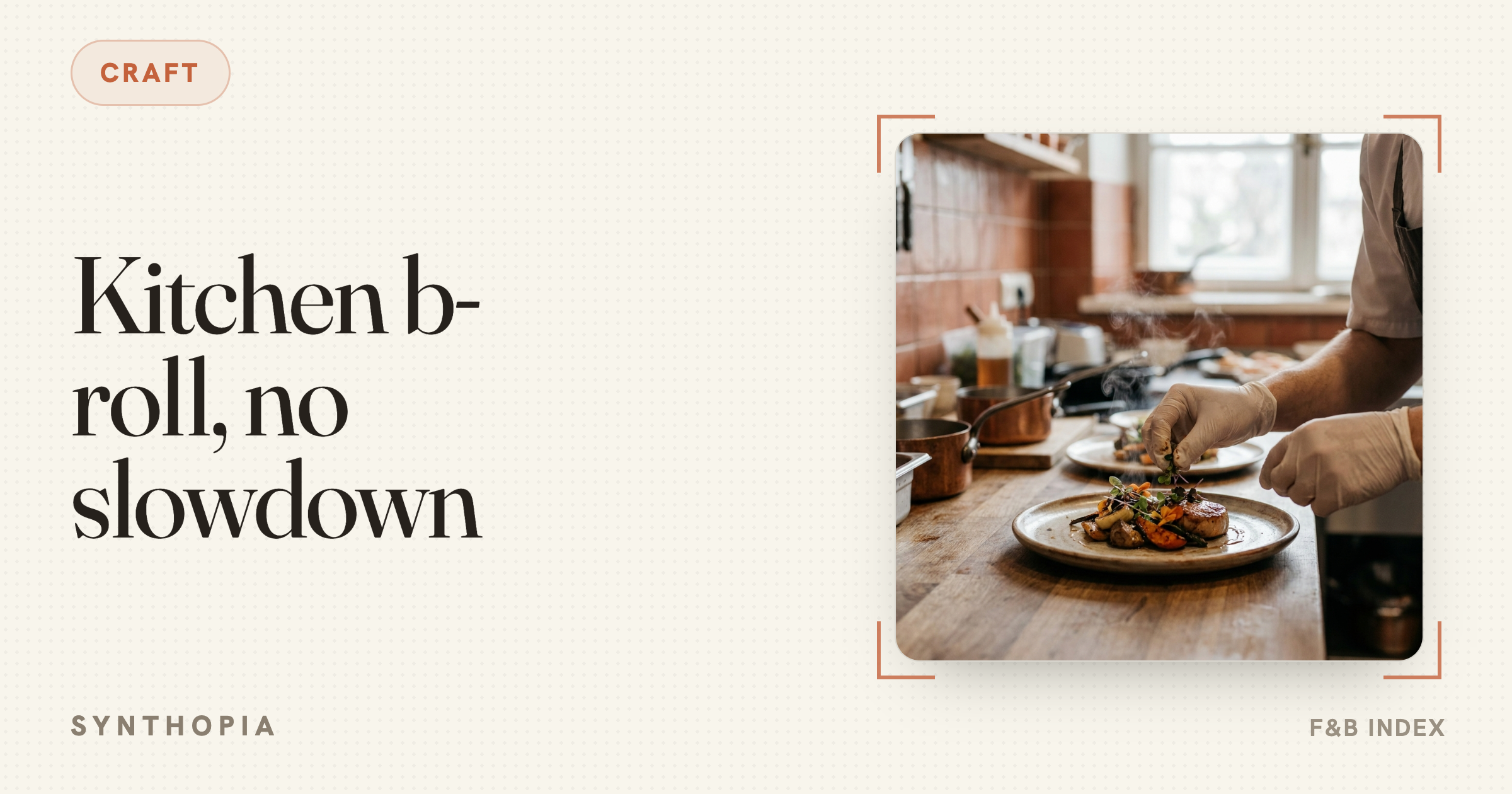
  • The plate-up, hands building a dish at the pass.
  • A clean knife cut through something with texture.
  • The handoff at the pass, where a finished plate leaves the kitchen.

In Dubai you've got signatures worth banking: the shawarma spit turning in Deira, the flame in an Al Quoz open kitchen, a dish being boxed for Talabat, an iftar spread coming together during Ramadan. Catch one clear action, close up. A wide, busy shot reads as chaos. A tight one reads as craft.

Framing and light in a real kitchen

Kitchens are not lit for film, so you work with what you have. Find the one good light, usually the pass or a window, and shoot toward it, not with it behind your subject. Get close: fill the frame with the pan, the hands, the plate, so the eye knows where to look. Keep the hero and the hands both in shot, because the hands are what make it human.

Wipe the lens first. Kitchens are greasy and a smeared lens ruins every clip. Hold the phone steady against your prop and let the action, not the camera, do the moving. One sharp, close, well-lit five-second grab is worth more than a minute of shaky wide footage.

Keep it clean, then bank it

Two rules keep this from annoying your team. First, the phone stays off the pass and out of the workflow: prop it to the side, never where plates move or where it can fall into food. Wipe it down, keep it out of the wet and the heat, and if it's in anyone's way, it comes down. B-roll is worthless if it slows a single ticket.

Second, bank and label. Drop every clip into one folder on your phone, named by month, so weeks of b-roll sit ready when you want to cut a reel. Do that and the footage is there when you need it, or when a tool like Synthopia turns it into a finished reel with captions across your channels. The kitchen did the hard part already.

Questions owners ask

What is b-roll for a restaurant and why does it matter?

B-roll is short supporting footage of process and atmosphere: steam, a sizzle, hands plating a dish. On its own it's a few seconds of nothing, but cut together it makes a food video feel like a live kitchen rather than a static menu shot, and it gives whoever edits real material to work with. It matters because motion tends to out-travel a single photo: it shows the craft a still can't.

How do I film in my kitchen without slowing down service?

Don't stage a shoot. Prop the phone against something at the right height, hit record, and let the action happen in frame while you carry on working. Grab five seconds of a moment that's already happening, then stop. Keep the phone off the pass and out of the way, and make it a quick weekly habit rather than an event, and service won't even notice.

What kitchen moments make the best food video clips?

The ones with motion and appetite. Steam rising, a sizzle as food hits the pan, a pour, the plate-up at the pass, a clean knife cut, and the handoff when a finished plate leaves the kitchen. Get close and catch one clear action: a tight shot reads as craft, while a wide, busy one just reads as chaos.

Questions owners ask

What is b-roll for a restaurant and why does it matter?

B-roll is short supporting footage of process and atmosphere: steam, a sizzle, hands plating a dish. On its own it's a few seconds of nothing, but cut together it makes a food video feel like a live kitchen rather than a static menu shot, and it gives whoever edits real material to work with. It matters because motion tends to out-travel a single photo: it shows the craft a still can't.

How do I film in my kitchen without slowing down service?

Don't stage a shoot. Prop the phone against something at the right height, hit record, and let the action happen in frame while you carry on working. Grab five seconds of a moment that's already happening, then stop. Keep the phone off the pass and out of the way, and make it a quick weekly habit rather than an event, and service won't even notice.

What kitchen moments make the best food video clips?

The ones with motion and appetite. Steam rising, a sizzle as food hits the pan, a pour, the plate-up at the pass, a clean knife cut, and the handoff when a finished plate leaves the kitchen. Get close and catch one clear action: a tight shot reads as craft, while a wide, busy one just reads as chaos.

Your restaurant, camera-ready

A month of marketing. One brief.

Clone a proven campaign — reel, stills, carousel and every line of copy — rebuilt from your own product and your own room. Your first preview is free.

Preview a campaign free
A month of marketing, one brief.Preview free