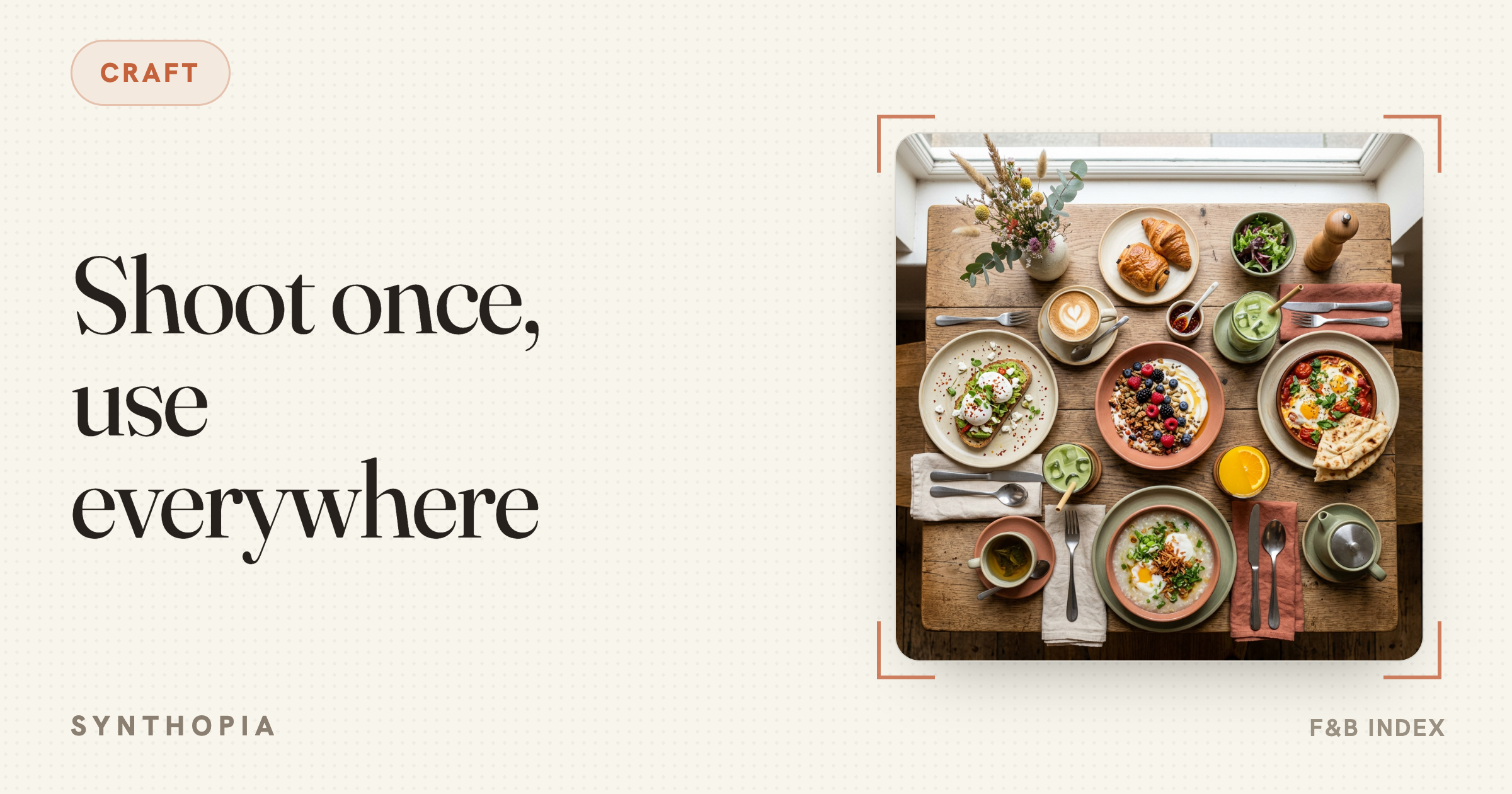
Most owners think video means becoming a filmmaker for one app, so they either freeze or burn a Sunday chasing one clever clip that flops. The trick is the opposite: film a few reliable moments during normal service, then cut the same footage into every format each feed wants. The habit is the win, not the viral hit.
1080 x 1920 (9:16): Instagram Reels and TikTok both use a 9:16 vertical frame at 1080 by 1920 pixels, per InVideo's 2026 reel size guide.
Why 'make a viral video' is the wrong goal
Chasing a viral hit is how most restaurant video habits die in week three. You spend hours on one clever concept, it does average numbers, and you decide video does not work for you. It does. It just rewards showing up, not going viral.
A steady stream of honest clips from real service builds familiarity, and familiarity is what makes a stranger walk in off the street. Aim for a filming habit you can actually keep during a busy week, not a home run you land once. The restaurants that win on video are not better filmmakers than you. They are the ones still posting in month six, while everyone who was chasing the perfect clip gave up in month one.
The shot list: the moments worth filming every week
You do not need new ideas every week. You need a repeatable set of moments. The pour. The plate-up. The first bite. The kitchen mid-service. The room filling at 8pm. That is five clips, and all of them happen anyway, whether you film them or not.
In Dubai, the visually rich rooms in JBR, Business Bay and Al Quoz do a lot of the work for you, so half the job is just pointing the phone at what is already there. Occasion moments give you a few extra beats through the year: an iftar table reveal during Ramadan, a National Day spread. Film the same handful of moments every week and you will never again open the app to a blank camera roll.
Filming basics on a phone
You already own the only camera you need. Four things separate a usable clip from a wasted one.
Light: shoot toward a window, never with a ceiling spotlight behind the dish. Close and steady: get near the food, rest your elbows or the phone on something solid, move slowly. Short: three to five seconds a shot, not a minute of drifting. Action, not aftermath: film the pour as it happens, the cheese as it pulls, the knife going in, not the finished plate sitting still.
In Dubai, keep framing modest and skip the alcohol pours. Shoot vertical, held upright, so the clip fills the whole screen instead of stranding your food in the middle of a letterboxed frame.
Here is the part that changes the maths. Film once, cut many. Reels and TikTok both want 9:16 vertical at 1080 by 1920 pixels, according to InVideo's 2026 reel size guide, so a single vertical shoot already fits both with nothing to reshoot.
The same raw clips become a 15-second reel, a longer TikTok, a Story, a square feed post, a still for the carousel, and a packaging shot for your Talabat listing. One filming session, cut to the length, ratio and captions each feed wants. You are not making six videos on six different days. You are making one set of footage and dressing it six ways, which is the only version of this that a working restaurant can actually sustain.
The editing tax, and a habit that survives service
Filming is the easy part. Editing is what kills the habit. Cutting one shoot into a reel, a TikTok, a Story and a square post, each with its own captions and safe zones, is a couple of hours you simply do not have during service. That editing tax is the real reason most restaurant video habits collapse by the third week.
So make the habit tiny and make the editing not your job. Pick one 20-minute filming slot a week, get your five clips, and hand the cutting to something that turns one brief into every format. When the editing disappears, the habit survives a busy week. That is exactly the part a one-brief-to-every-cut system removes, so the footage you shot on Tuesday is live everywhere by Wednesday, instead of sitting on your phone forever.
A starter shot list you can film this week
Try this, this week:
- The signature drink pour, shot toward the window.
- The plate-up of your best-selling dish.
- A first bite or a cheese pull, close and steady.
- Ten seconds of the kitchen mid-service.
- The room at your busiest hour.
Five clips, three to five seconds each, all vertical, all from real service. That is a week of content across every feed from twenty minutes of filming. Do it again next week with the same five moments and different dishes. The point was never one perfect video. It was a habit the busiest service cannot break. We publish the Synthopia F&B Index, a survey of more than 5,000 Dubai restaurants and cafes, and the whole product is built for operators who would rather run the floor than sit editing on a Sunday.
Questions owners ask
What kind of videos should a restaurant make?
Keep a repeatable shot list rather than a new idea each week: the pour, the plate-up, the first bite, the kitchen mid-service, and the room filling up. All of it happens during normal service, so you are capturing what is already there, not staging a production. Filming a few reliable moments every week beats chasing one clever viral concept, because familiarity, not novelty, is what makes people walk in.
How do restaurants make good food videos on a phone?
Four basics do most of the work: natural light (shoot toward a window), get close and steady, keep each clip to a few seconds, and film the action (the pour, the cheese pull, the knife going in) rather than the finished plate sitting still. Shoot vertical so it fills the screen. The same clips can then be recut into every platform's format instead of reshooting, so one good phone shoot covers a lot of ground.
How can one video be used across Instagram, TikTok, and other channels?
Film raw once, then cut per format. Reels and TikTok both use 9:16 vertical at 1080 by 1920 pixels, per InVideo's 2026 size guide, so a single vertical shoot already fits both, and the same footage becomes a Story, a square feed post and a delivery-listing clip with different lengths and captions. Cutting those versions by hand is the tax that kills most video habits, so automating the per-format cuts is what keeps one shoot feeding every feed.